Clover · Fiserv · Fintech · Payments
Overview
Clover's professional services merchants were losing business to competitors. Without a native estimates feature, they stitched together third-party tools for the front half of every job then returned to Clover to collect payment. The workflow was fragmented, the experience broken, and Clover was losing merchants to platforms that owned the full loop. I was brought in as sole design lead to close that gap, from research through to launch.
Merchant base served
Of Clover's professional services merchant base now using Estimates natively.
Conversion growth
Growth in estimate-to-invoice conversion since the feature launched.
VAS revenue mix
Of Clover's total revenue mix now attributed to value-added services.
Closed a critical workflow gap. Professional services merchants can now create estimates, get client approval, and convert to invoice without ever leaving Clover, collapsing a 3-platform workflow into one.
Designed for the full ecosystem. Built in close collaboration with Clover's Invoicing team so estimates and invoices feel like two parts of the same product, not two separate features bolted together.
Advocated for the right solution, not the convenient one. When engineering constraints pushed toward repurposing an existing pattern, I proposed a net-new approach that preserved merchant mental models and reduced long-term friction.
Sole product designer across the full estimates feature. Led competitive research and user interviews, designed end-to-end merchant and customer flows, built and tested prototypes with real users, collaborated with the Invoicing team on cross-feature coherence, and partnered with engineering through design QA and build. Currently leading advanced payment terms and scalability design.
Workflow comparison — Before and After
Key Signal
No competitor owns the full estimate-to-payment loop natively within a POS ecosystem. That is Clover's advantage, and the foundation this feature was built on.
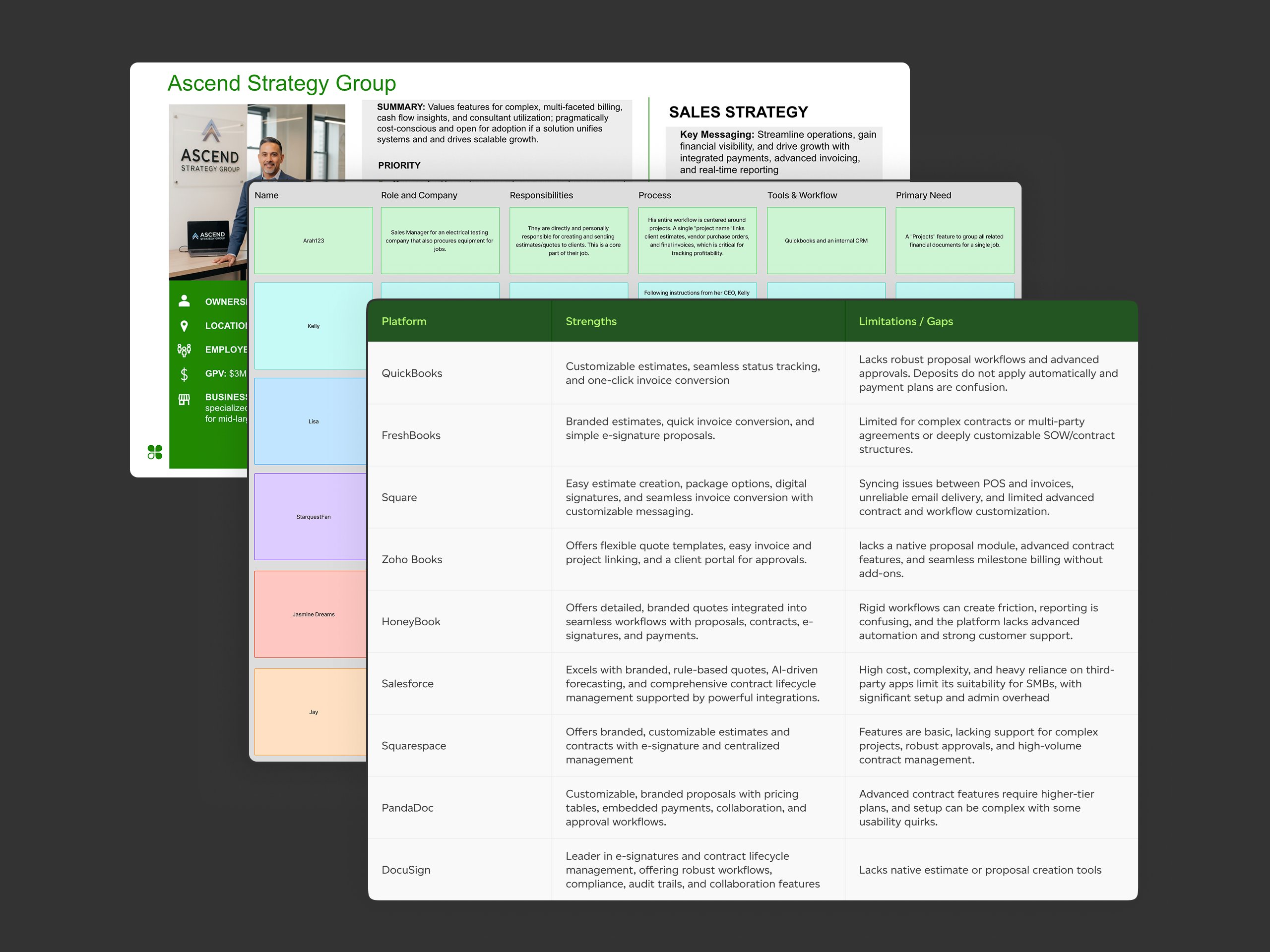
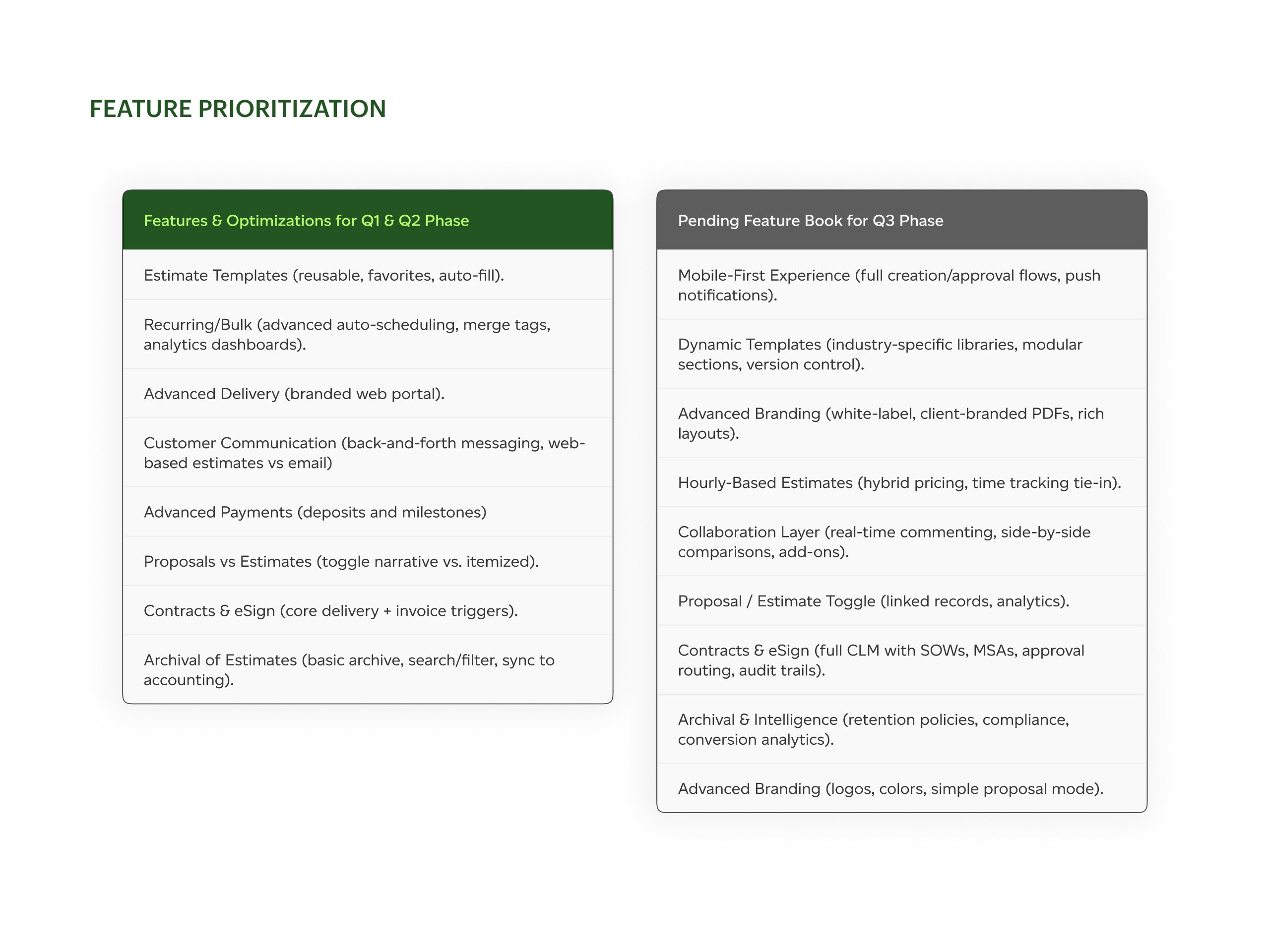
Six merchant interviews. Five competitors mapped. One clear MVP focus: create, send, convert.
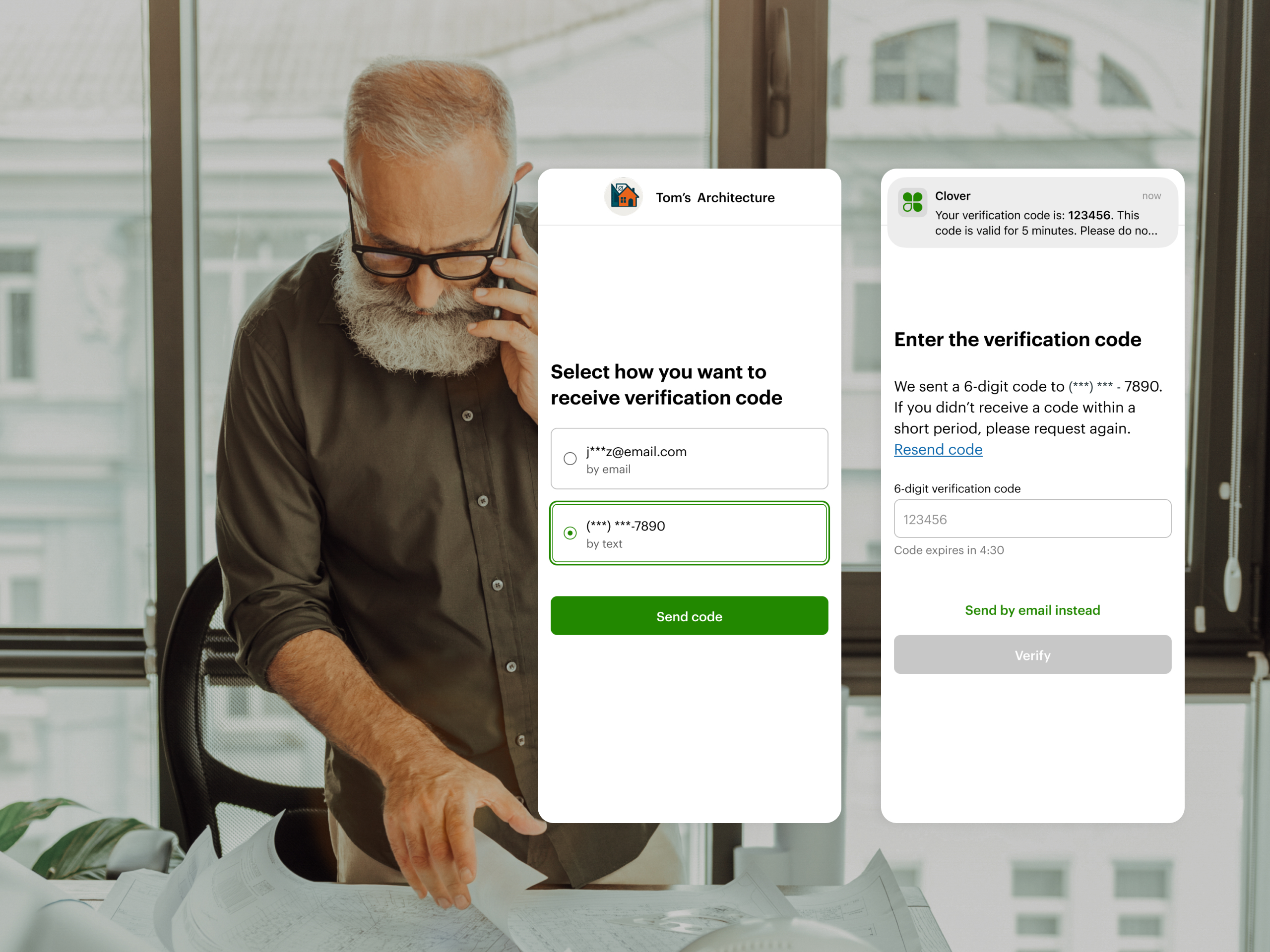
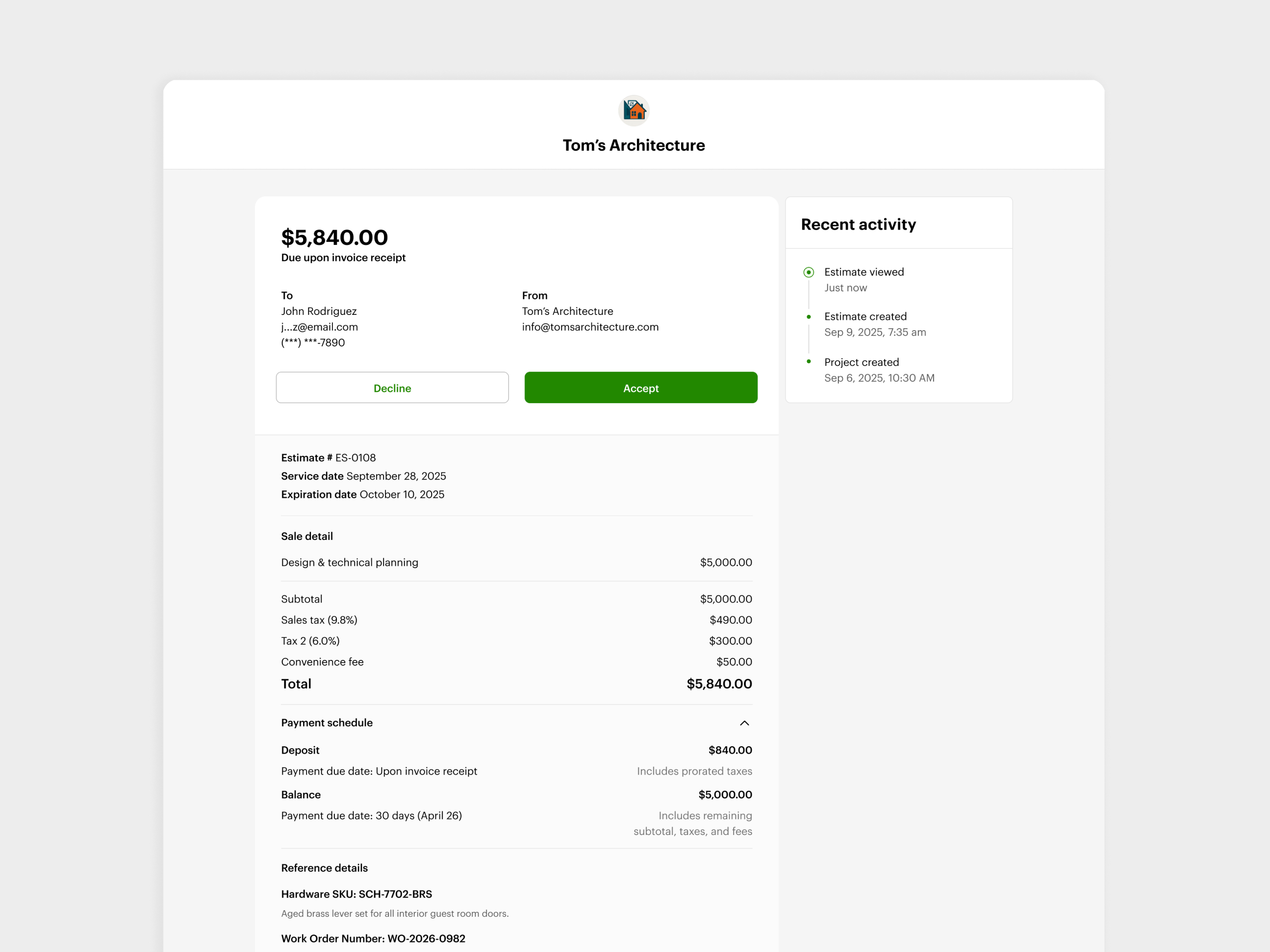
The client side. OTP-authenticated approval gave merchants a formal sign-off record and removed the ambiguity of email threads and phone calls.
Engineering wanted to repurpose Custom Fields. It would have shipped faster. It also would have broken a pattern merchants already relied on. I pushed back.
On proposing Reference Details
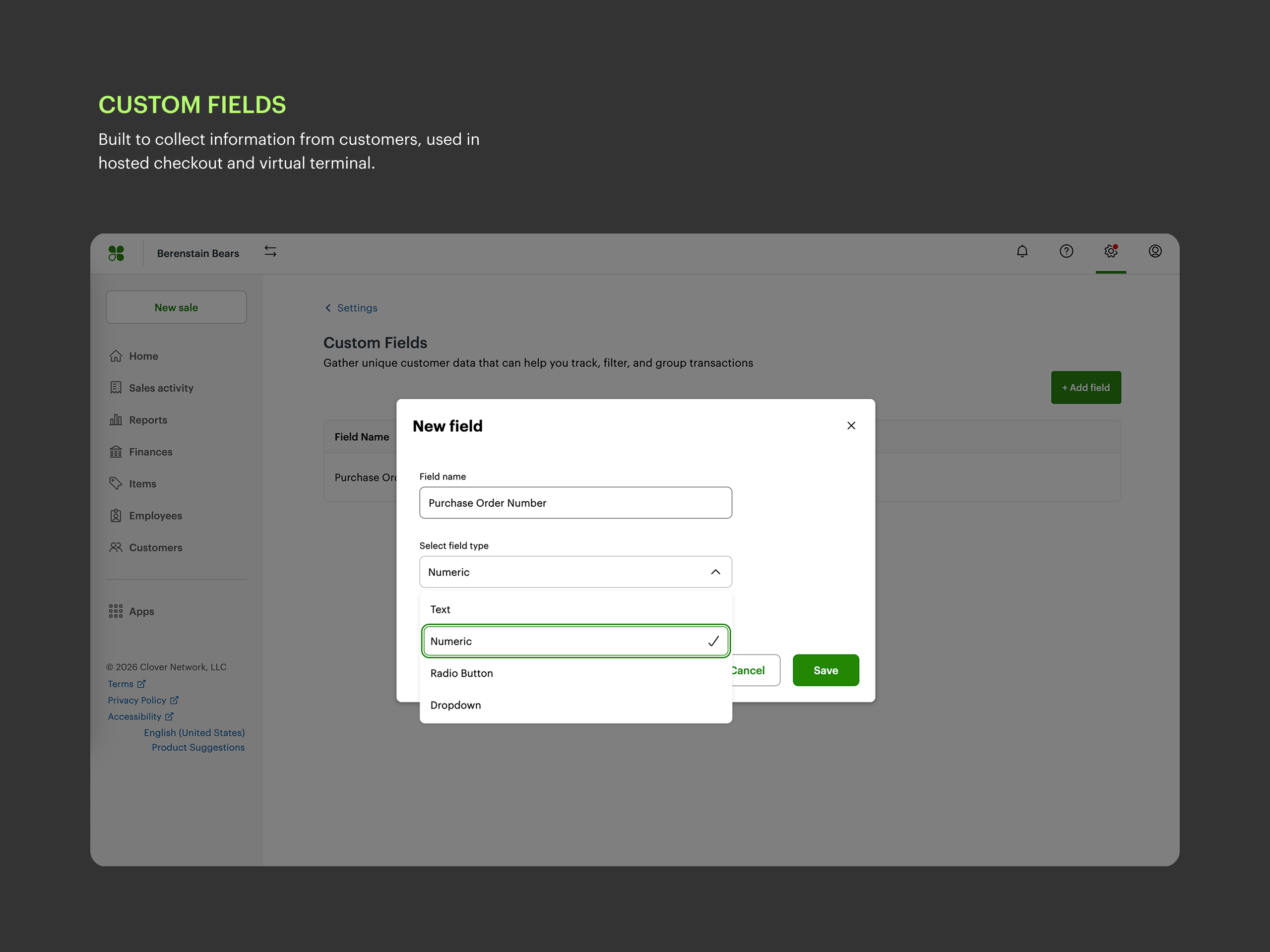
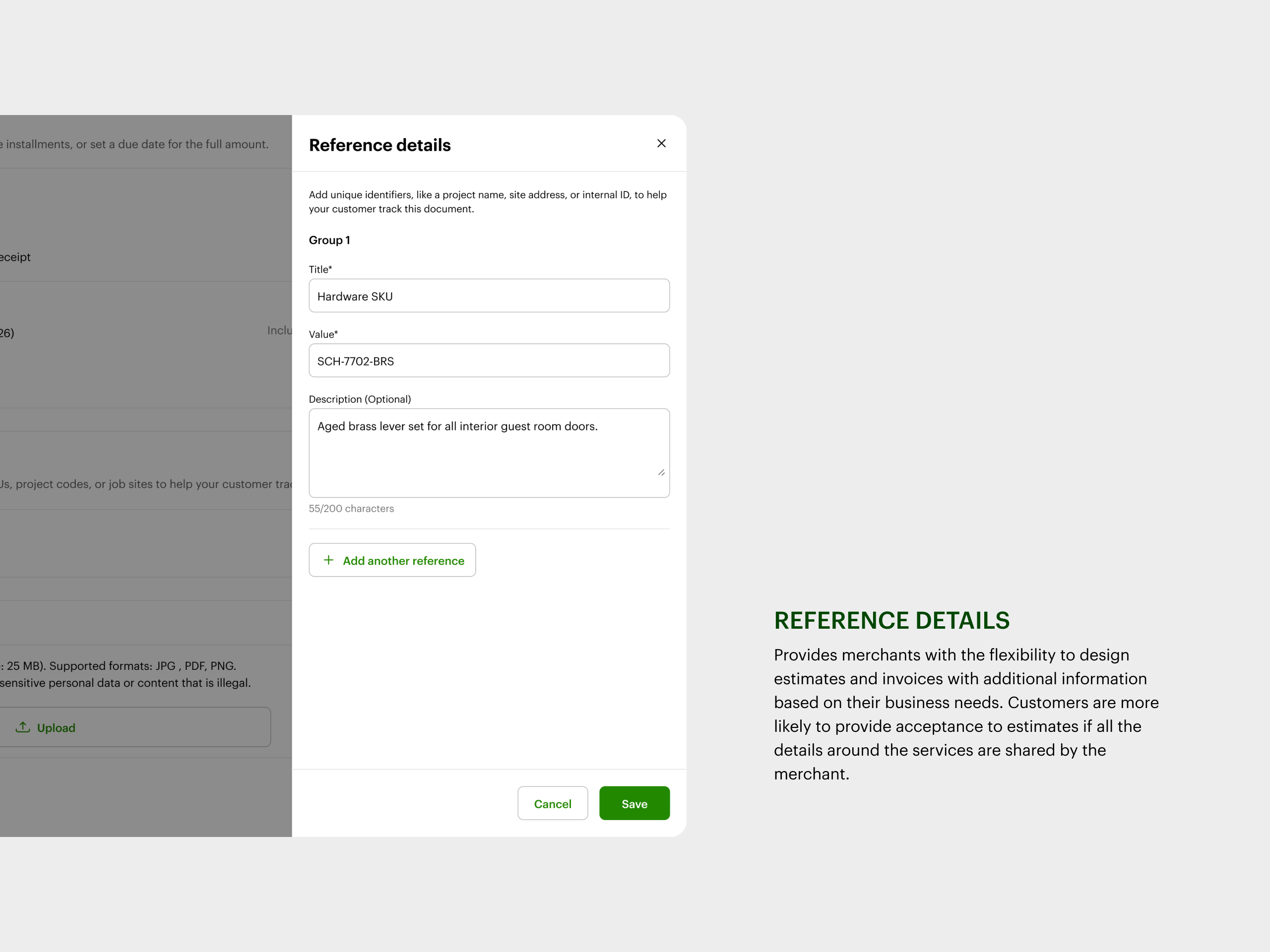
When the team needed a way for merchants to add project-specific data to estimates, the path of least resistance was to repurpose Clover's existing Custom Fields feature. The problem: Custom Fields was built to collect information from customers. Reference Details needed to provide information to them. Same surface, opposite direction. Conflating the two would have created confusion about when to use which, and risked breaking an existing merchant workflow without warning.
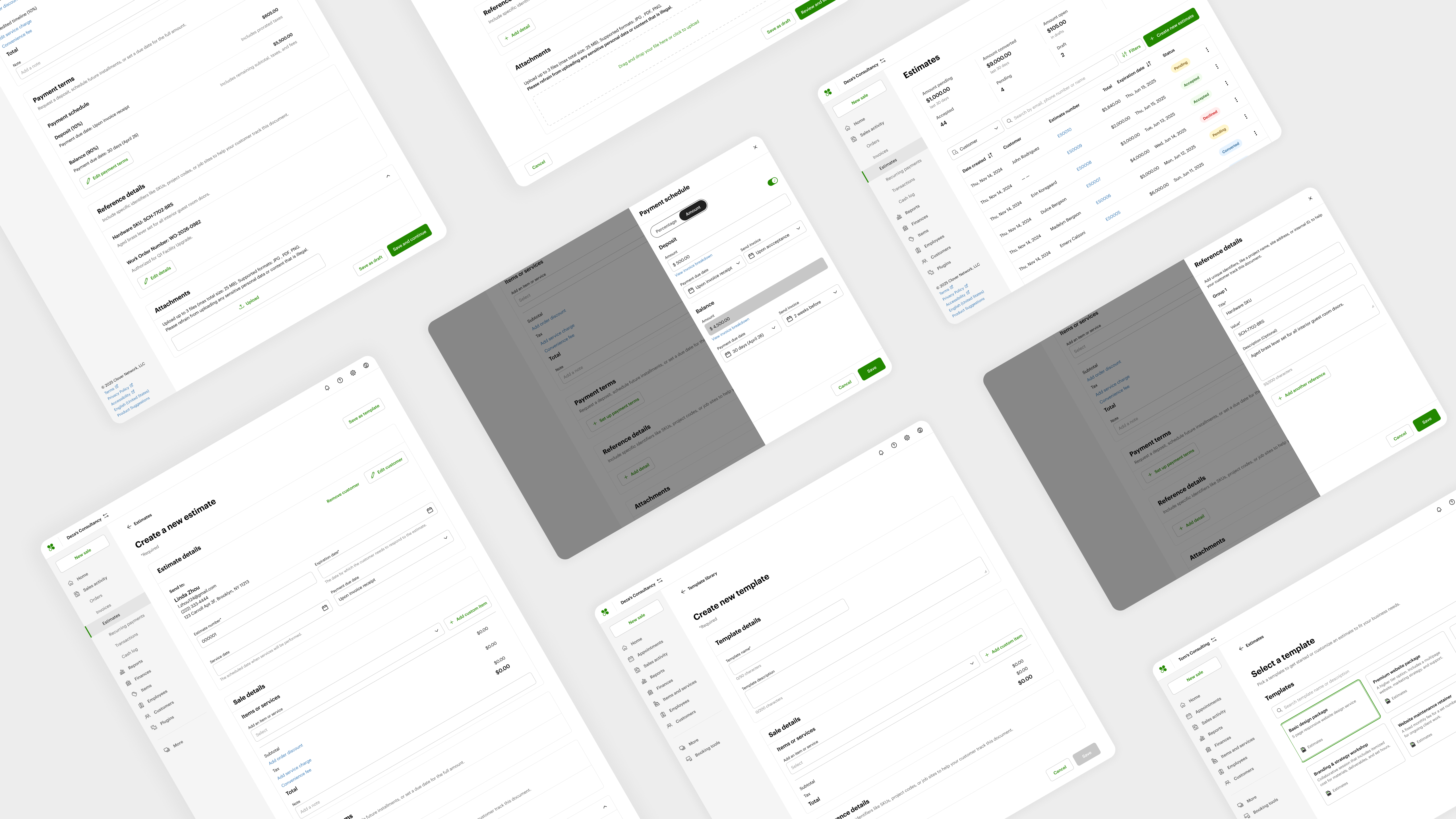
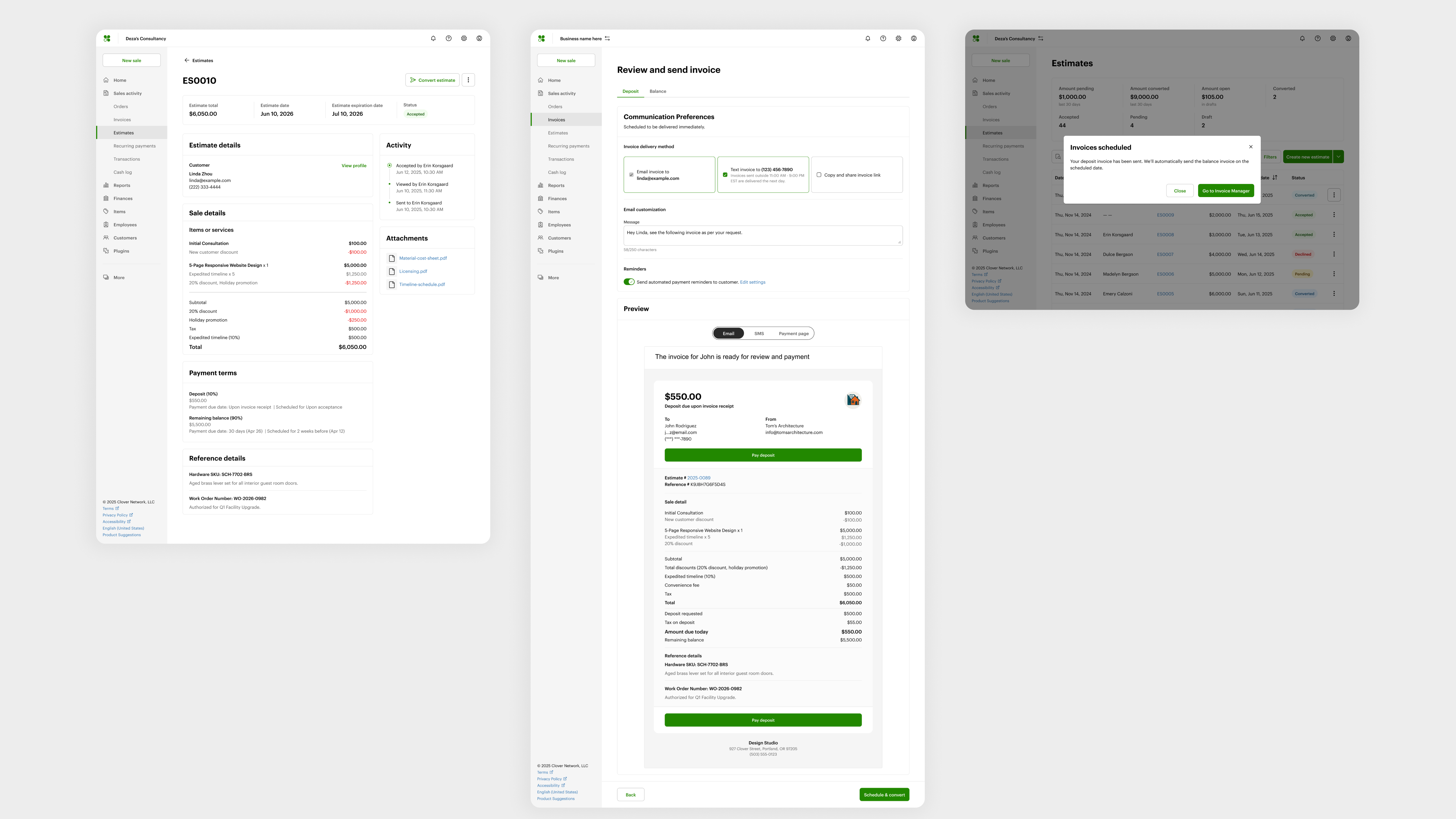
I proposed a net-new feature scoped specifically to estimates. Single purpose, clean mental model, searchable by reference field. The proposal was approved and is in merchant testing.
The ideas that moved forward weren't the ones argued for loudest. They were mocked up, validated with real merchants, and presented within Clover's existing framework. A working prototype in the right person's hands is worth ten slides of rationale.
Linear process — research, design, engineering — creates a blind spot. Constraints that surface late force redesigns that could have been avoided. Pulling engineering in early, even informally, means less rework and more creative problem-solving before a direction is locked.
Flows that felt obvious internally consistently confused merchants in practice. The more frequently we tested, the less we shipped wrong. It's not a luxury — it's the fastest path to a feature that actually works.
Impact
Platforms Required
Collapsed a fragmented 3-platform workflow into a single native Clover experience.
Estimate-to-Invoice Conversion
Of merchants who created an estimate converted it to an invoice within their first 30 days.
Avg. Estimates per Merchant
Average estimates created per merchant in their first 30 days, showing repeat usage rather than a one-time trial.