Clover · Fiserv · Fintech · Loyalty
Overview
Clover acquired Perca to bring loyalty into its POS ecosystem. The intention was right. The execution needed work. Adoption was low, setup was confusing, and customers had no meaningful touchpoint with rewards during checkout. I was brought in as sole design lead to reimagine it end-to-end, for merchants and customers alike, across every device in the Clover ecosystem.
Platform reach
Devices worldwide running the redesigned loyalty experience.
Merchant adoption
Of merchant base using customer engagement tools post-launch.
Redemption rate
Increase in redemption rate following the redesigned customer experience.
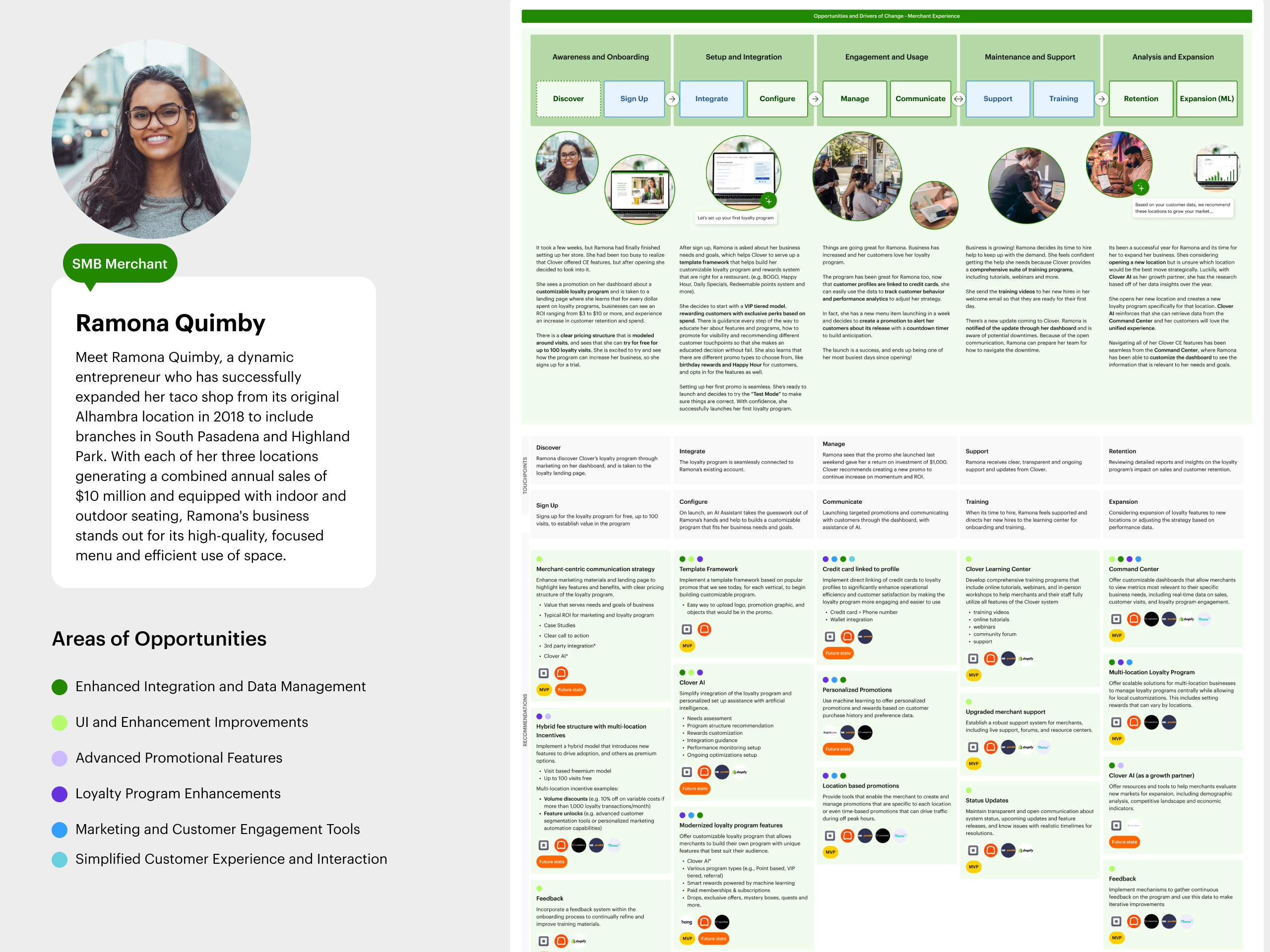
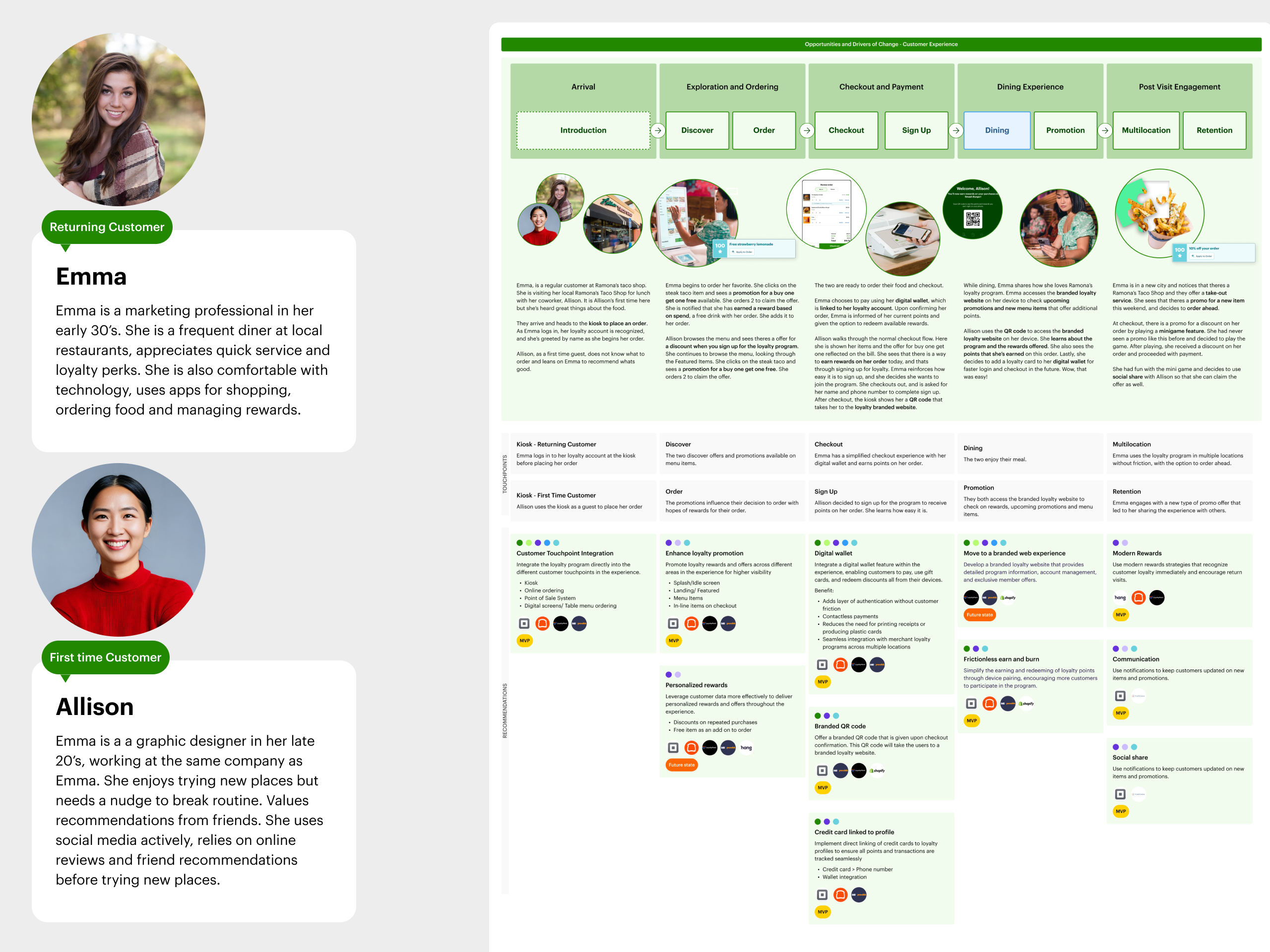
Designed for two audiences simultaneously. Merchants needed a guided, intuitive setup experience. Customers needed to feel the loyalty program during checkout, not discover it by accident. Both had to work together as one coherent system.
Research translated directly into product strategy. Competitive analysis across seven platforms and interviews with five merchants produced a feature recommendation document that shaped what Clover's leadership decided to prioritize and build.
Blue sky thinking opened the door for future work. When infrastructure constraints forced the scope down, the bigger ideas didn't disappear. They started a conversation with Clover's CEO that is now driving a dedicated loyalty app and merchant marketplace.
I was out with a friend getting coffee after archery. I had just finished telling her what I do for work when I saw it. My design, running on the screen at the register. After all the long conversations, the pushback, the scoping down and fighting to keep the experience moving forward. There it was. Being used by real people.
On seeing the designs live in the wild
Sole design lead for the full 12-month engagement. Led competitive research and merchant interviews, planned design milestones and deliverables, designed end-to-end merchant and customer experiences across the Clover device suite, built and tested prototypes with real users, and partnered with engineering through design QA and build.
Clover had loyalty. Merchants just weren't using it. The setup experience was unguided and time-consuming, the value of the product was never marketed clearly, and customers had no meaningful touchpoint with loyalty during checkout. Many merchants had simply given up on it.
At the same time, a flat-rate pricing model meant Clover was earning the same regardless of how deeply merchants used the product. There was no incentive structure to drive engagement, and no design system to support one. The entire experience needed to be rethought from the ground up, for merchants and customers alike.
Two distinct audiences, one coherent system. Merchants managing programs on the left, customers earning rewards on the right.
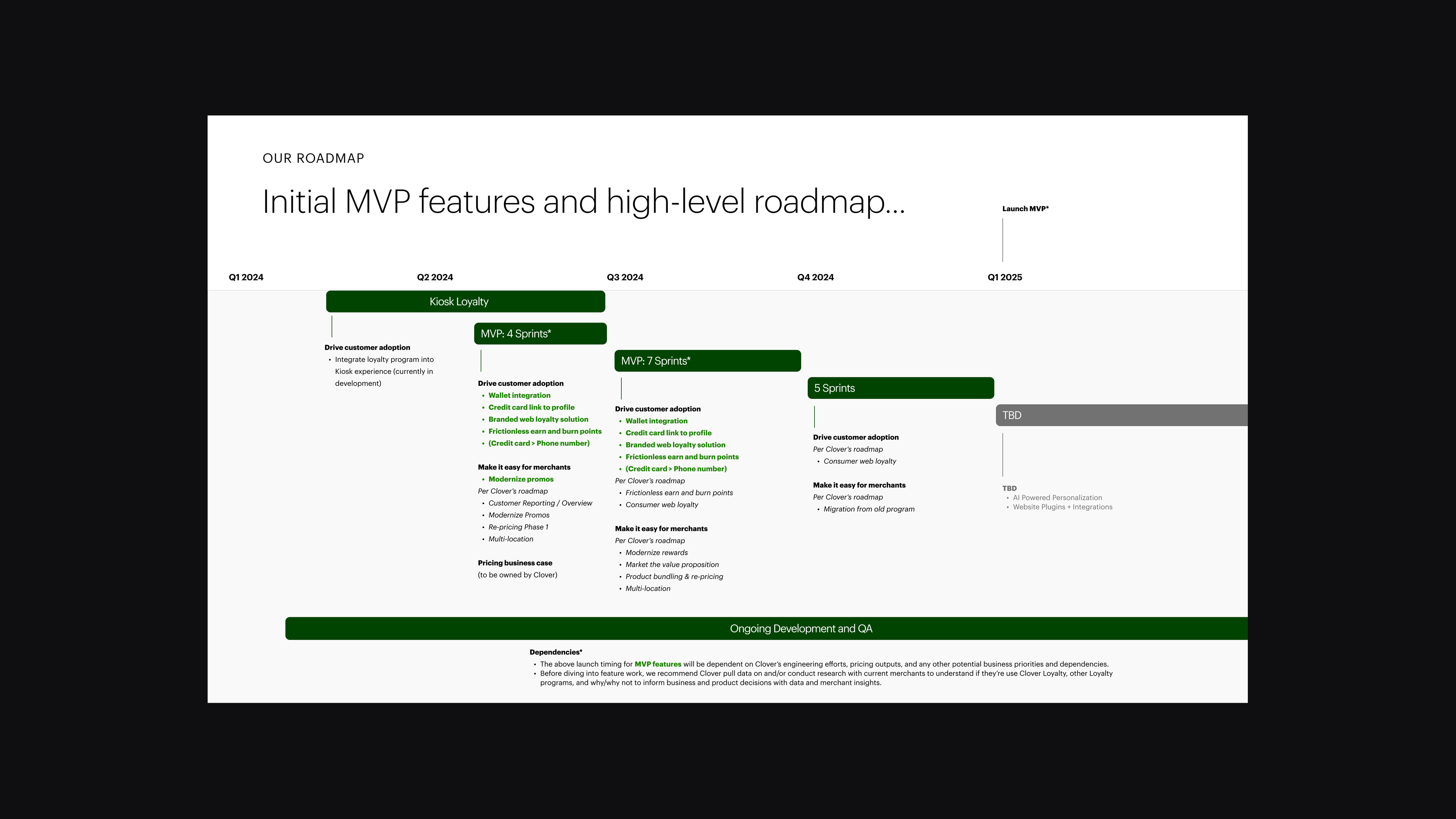
Seven competitors. Five merchant interviews. Two user journeys. One roadmap — quarterly delivery from Q1 2024 through Q1 2025.
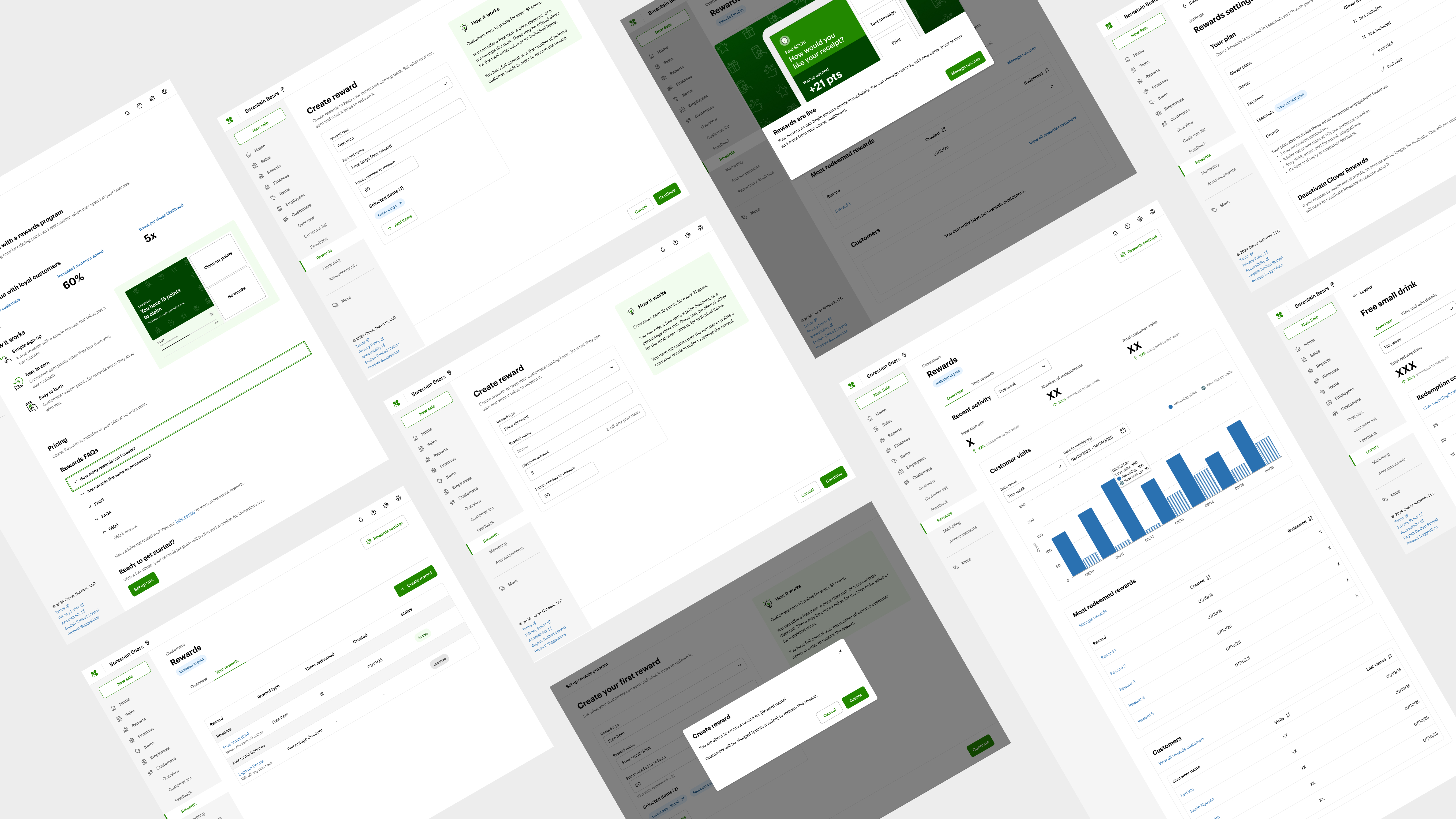
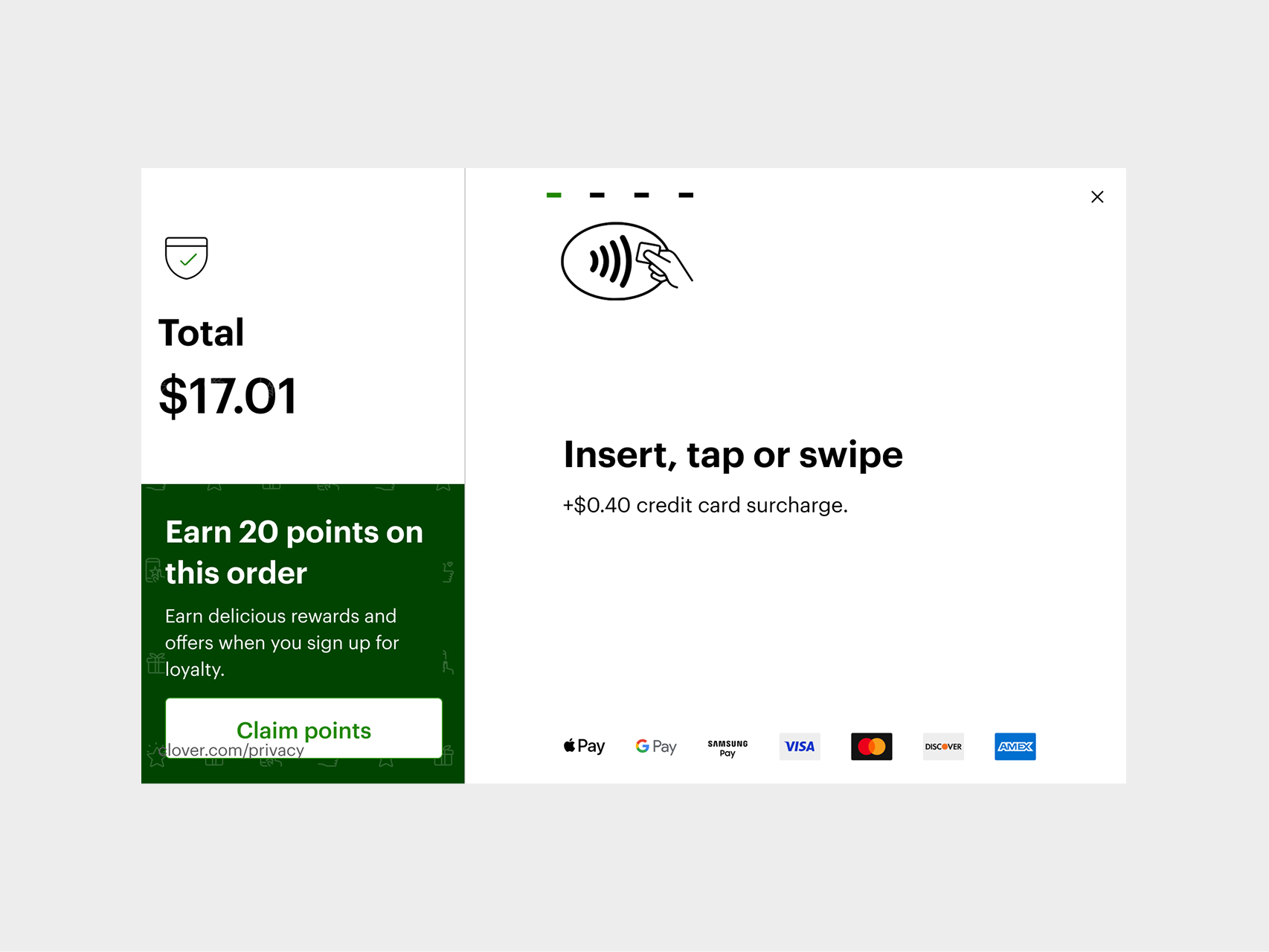
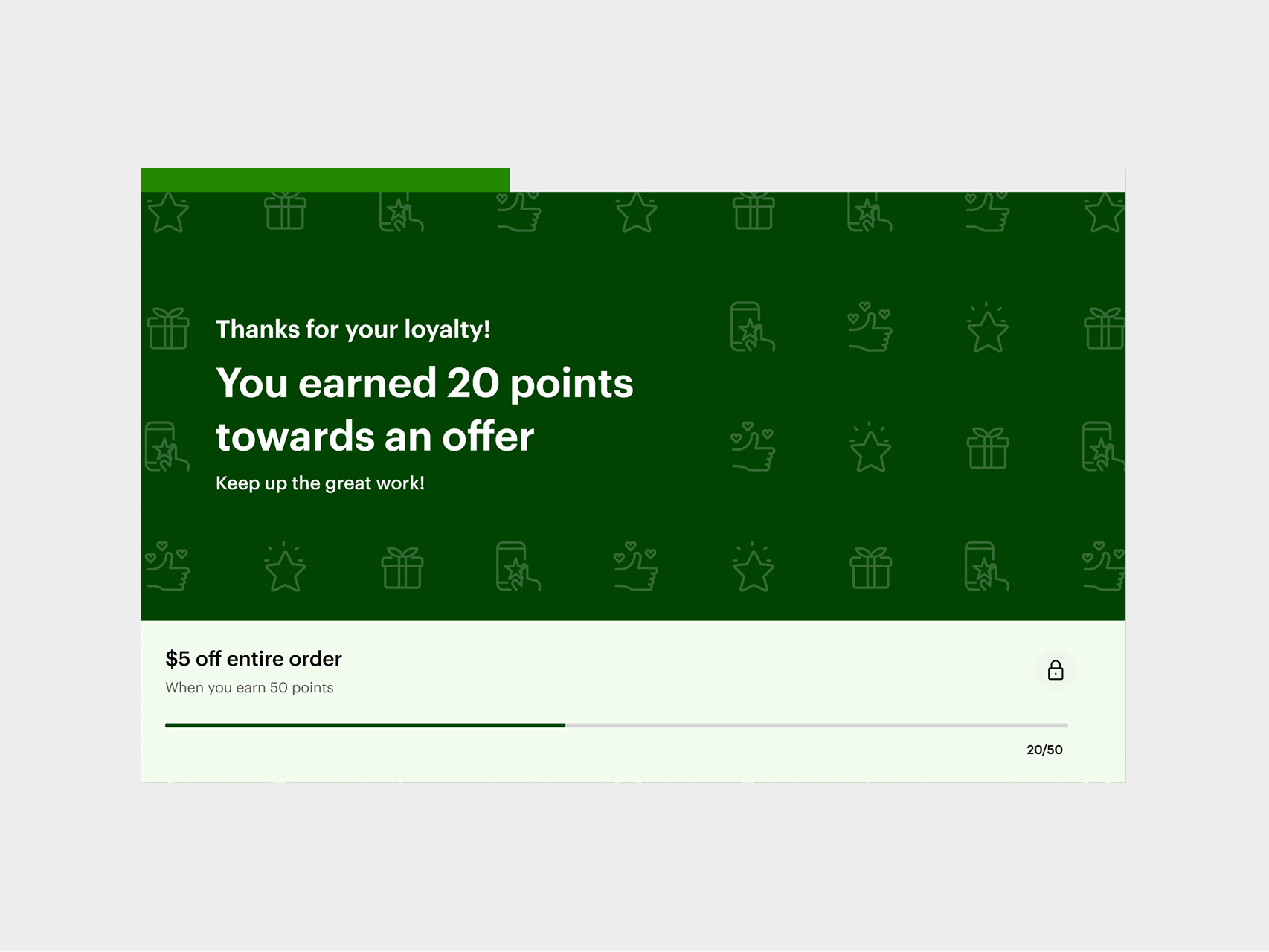
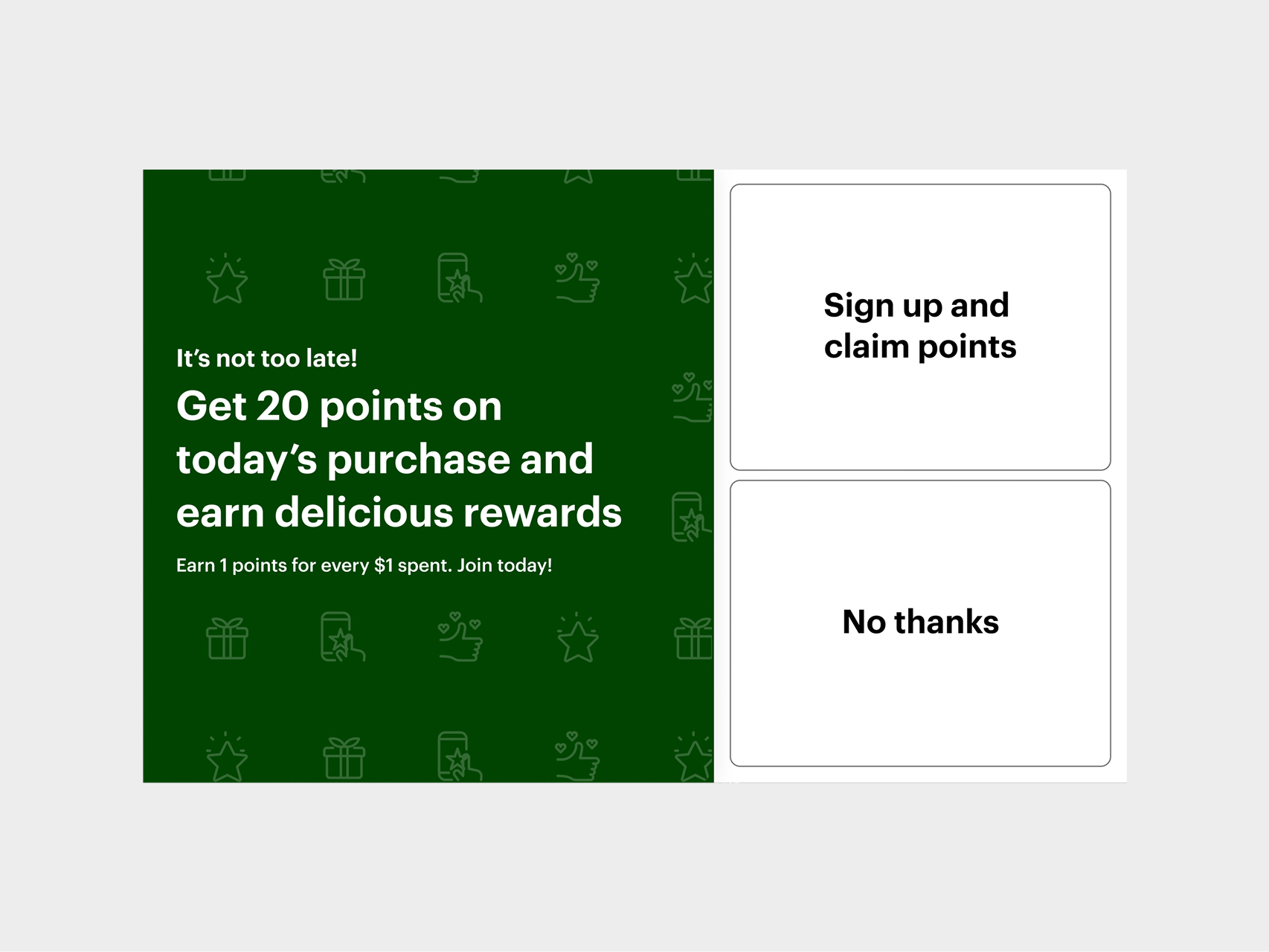
Sign up, earn, get nudged. The checkout speed bump was the most critical touchpoint — a low-friction moment to convert a transaction into a loyalty relationship.
Clover's infrastructure wasn't ready for the level of innovation the research pointed to. The blue sky ideas, grounded in best-in-class competitor patterns and real merchant needs, got scoped down significantly. That's a frustrating place to be as a designer. You've done the research. You know what users need. And you're being asked to deliver less.
The way through it was to stay focused on what advocacy actually means in practice. You don't always get to build the ideal solution. But you do get to make sure the conversations happen, the ideas are documented, and the door stays open for what comes next. A conversation with Clover's CEO planted a seed. A team is now building the loyalty app and marketplace that seed became.
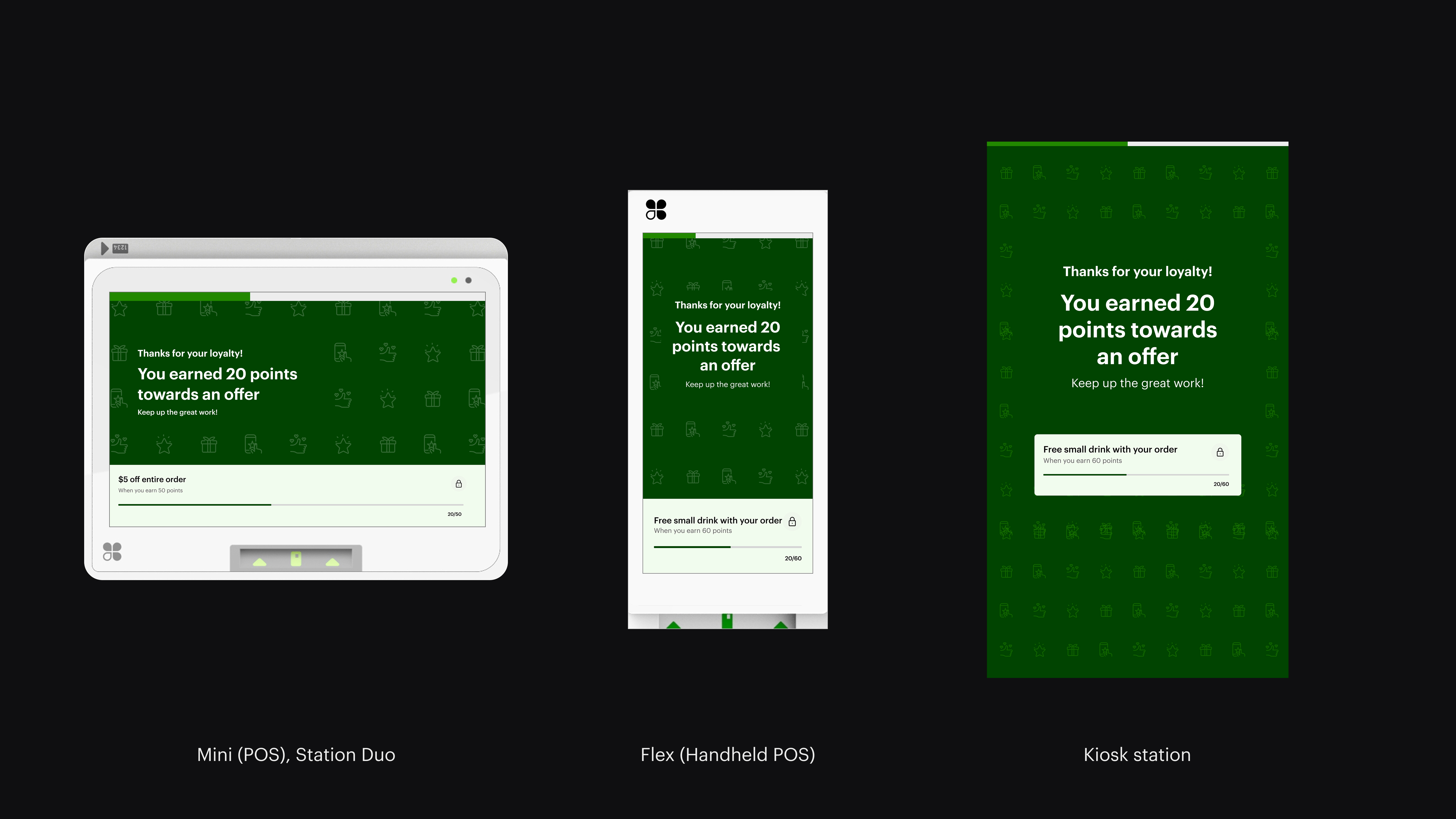
The features that got cut from this engagement didn't disappear. They became the foundation for a follow-on team and a product direction that wouldn't have existed without the initial push. Planting a well-researched idea in the right conversation is sometimes more valuable than shipping a smaller version of it.
We interviewed merchants but couldn't access customers directly. That gap showed up in the work. The customer-side experience was designed from proxy data and competitive patterns rather than direct insight. If I ran this engagement again, I would push harder and earlier to close that research gap, even if it required creative methods to get there.
Stakeholders respond to ideas they can see and touch. When blue sky thinking got resistance, the ideas that survived were the ones mocked up in the current framework, tied back to user research, and presented with a clear rationale for why now.
Impact
YoY Revenue Growth
Year-over-year revenue growth attributed to the redesigned loyalty and engagement program.
Adoption Rate
Merchant adoption rate over two years, up from a baseline that had stalled before the redesign.
Team Continuing the Work
A dedicated team now building a loyalty app and merchant marketplace, tracing directly to this engagement.